

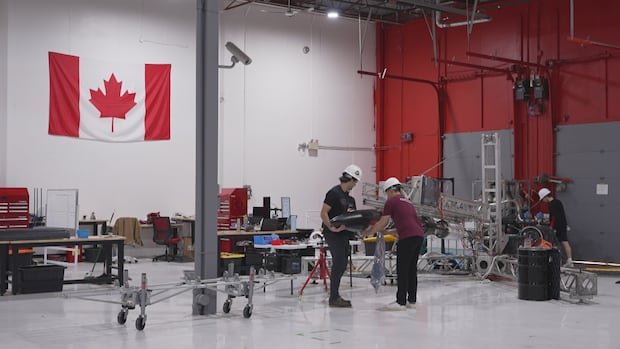

Canada, as the sole G7 nation lacking its own rocket launch capabilities, is striving to develop a Canadian-manufactured rocket. Several Canadian companies are in a race to provide the country with indigenous space access, especially with concerns that SpaceX might reduce its orbital launch services. However, these rocket firms face challenges in meeting tight deadlines and adapting to shifting government priorities, making the journey to space complex.
Without domestic rocket launch capabilities, Canadian customers rely on external providers, predominantly American companies like SpaceX. These satellites are crucial for various applications such as telecommunications, military operations, and environmental monitoring. Marc Boucher, the founder of SpaceQ, emphasizes the importance of Canada establishing its launch capabilities to avoid dependence on foreign entities for launching Canadian technology.
The Canadian government has recognized space as a critical sovereign capability and introduced legislation to authorize launches from Canadian soil. Recent funding initiatives include $8.3 million each for three Canadian companies working on rockets, aiming to achieve light-lift rocket capabilities by 2028. NordSpace, established in 2022, and Reaction Dynamics are among these companies striving to reach orbit by the government’s target year.
Canada Rocket Company, a newcomer, aims to develop a medium-lift rocket powered by methalox-fuelled engines. With private investments and government support, the company is confident in its goal of launching by 2032. The funding boost marks a positive shift for Canadian rocket development, addressing the historical challenge of limited funding hindering progress in rocket manufacturing.
SpaceX’s plan to phase out its Falcon 9 rocket in favor of the larger Starship vessel poses concerns for satellite customers reliant on SpaceX’s services. This transition could create opportunities for emerging rocket companies like Canada Rocket Company to fill the gap left by Falcon 9. The potential scarcity of rideshare options post-2028 underscores the significance of establishing a robust Canadian rocket industry.
While optimism surrounds the burgeoning Canadian rocket sector, challenges lie ahead. Rahul Goel, CEO of NordSpace, acknowledges the volatile nature of funding in the industry and is working to expedite launch capabilities. Building a rocket to orbit requires substantial funding and a long-term commitment, with estimates suggesting the need for additional financial support to meet the ambitious 2028 timeline.
In conclusion, the development of Canada’s rocket industry is gaining momentum, driven by government support and private investments. Establishing indigenous launch capabilities is crucial for Canada’s space sovereignty and reducing reliance on foreign providers like SpaceX. The road to achieving regular rocket launches from Canada is a long-term endeavor, demanding sustained funding and determined efforts from the burgeoning Canadian rocket companies.