


Hating a movie can be just as engaging and possibly more enjoyable than loving it. A movie that’s notably foolish, poorly conceived, or outright malevolent can offer ample material for contemplation and conversation, akin to a genuinely impactful film. In both scenarios, there is something worth discussing.
It’s disappointing to come across a film like “The Social Reckoning.” This sequel, written and directed by Aaron Sorkin, follows the 2010 film “The Social Network,” a remarkable account of Facebook’s origins scripted by Sorkin and directed by David Fincher. Sadly, “The Social Reckoning” falls into the category of distasteful anti-art creations.
The movie is so vacuous and unoriginal that it fails to evoke genuine hatred, despite attempting to pass itself off as perpetually relevant. It is an insipid bore that lacks the depth or substance to even disagree with, let alone provoke productive animosity. This underwhelming portrayal of social media’s pitfalls and corporate-controlled groupthink ironically mirrors the very issue Sorkin aims to highlight: the abundance of subpar, unengaging “content” saturating our social media feeds and personalized pages.
Despite a cast and crew comprising some of the industry’s most intriguing talents, “The Social Reckoning” navigates Facebook’s era of exponential expansion, promising to expose one of the tech oligarchs wreaking havoc. While the film sets the stage for a compelling narrative, it ultimately falls short, failing to offer substantial insights or a compelling standpoint to engage with.
The movie follows the journey of a Wall Street Journal reporter, Jeff Horwitz, portrayed by Jeremy Allen White, and Frances Haugen, played by Mikey Madison, a disillusioned Facebook employee. They uncover a clandestine operation known as MSI (Meaningful Social Interactions) that has been fueling chaos, undermining governments, and distorting truth.
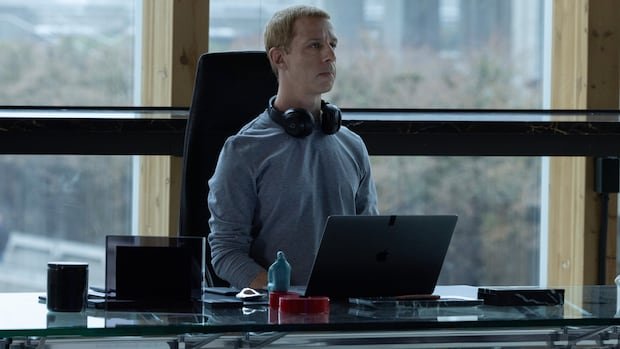
As the plot unfolds, Jeremy Strong takes on the role of Mark Zuckerberg, depicting his downfall amid scrutiny over his company’s impact on democracy and children’s mental well-being. However, this portrayal lacks the depth and intrigue seen in previous character interpretations, leaving Zuckerberg’s character feeling more like a peripheral figure in the narrative.
The film’s shortcomings can be attributed to Sorkin’s direction, which fails to leverage the potential of its talented cast. The narrative leans heavily on clichés and falls short of delivering a compelling storyline, relegating pivotal characters to mere conduits for advancing a lackluster plot.
In essence, “The Social Reckoning” serves as a missed opportunity to address pertinent issues with depth and nuance. It fails to evoke strong emotions or engage viewers on a profound level, ultimately succumbing to mediocrity and playing it safe. This lack of ambition and creative risk-taking diminishes the film’s impact, leaving audiences yearning for a more thought-provoking and daring cinematic experience.