

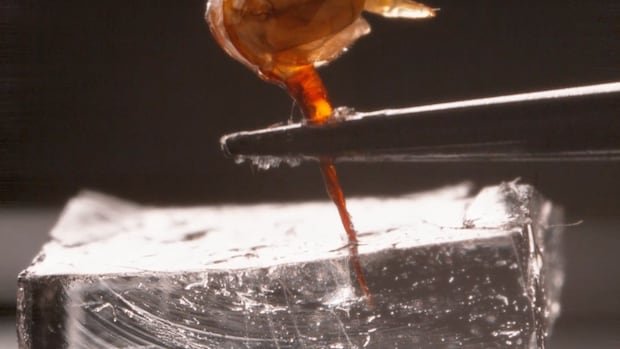

A western honey bee’s stinger is a final line of defense, intended to penetrate flesh and deliver venom, often leading to the bee’s demise. Recent research published in the Proceedings of the National Academy of Sciences sheds light on the effectiveness of this defensive mechanism. Fiorella Ramirez Esquivel, a postdoctoral researcher at Macquarie University, explained that filming the bees in action was made possible by modern cameras.
Utilizing high-speed cameras capable of capturing hundreds of frames per second, Ramirez Esquivel and her team observed the intricate process of the bee stinger in action. By dissecting live honey bees and swiftly transferring the stinger to an artificial skin substitute, they were able to study the mechanics of the stinging apparatus before it became inactive.
The study revealed a double-piston design within the stinger, where specialized valves work simultaneously to drive the stinger deeper into the target while continuously pumping venom from the sac. This intricate mechanism, likened to a complex engine, allows for the sustained delivery of venom during an attack.
Juliana Rangel, an apiculture professor, expressed fascination with the research findings, highlighting the unique insights gained from observing the stinging process. The study emphasizes the importance of the honey bee’s stinging behavior in defending the larger colony, showcasing the evolutionary significance of this defense mechanism.
Despite the risks involved in stinging, honey bees play a crucial role in their social structure by sacrificing their lives for the greater good of the colony. The release of pheromones during a sting also serves to rally other bees to join in the defense against threats.
This research not only deepens our understanding of honey bee behavior but also raises questions about the evolution of stinging mechanisms in different bee species. The study’s findings could potentially have applications in medical research, offering insights into designing systems for controlled and continuous fluid delivery.
The study of honey bee stinging mechanisms provides valuable insights into the complex world of bees and their unique adaptations for survival and defense.