

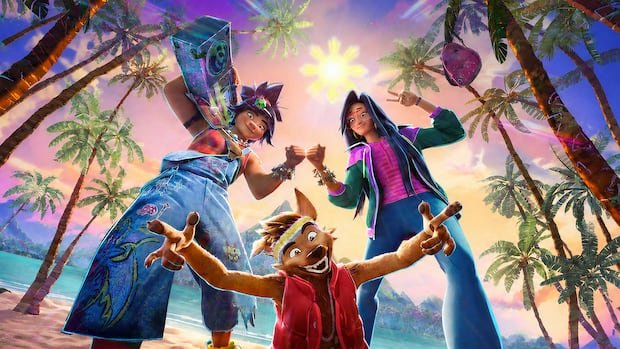

Tricia Serdon, a Filipino Canadian, reminisced about her childhood watching Disney movies and hoping to find a princess who resembled her, but never quite did. However, her search came to an end with the release of “Forgotten Island.”
The film, a production by Dreamworks Animation that premiered on Sept. 25, stands out as the first major Hollywood animated feature to showcase Filipino culture and mythology at its core. It follows the journey of childhood friends Jo and Raissa, whose paths diverge when Raissa heads to the U.S. for college while Jo remains in the Philippines.
In the narrative, as the friends cope with the pain of separation, they are drawn into Nakali, a mystical realm inhabited by supernatural entities inspired by Filipino folklore that has been passed down through generations. The term “Nakali” is derived from the Tagalog word “nakalimutan,” meaning “forgotten.”
Although rooted in ancient tales, the film’s setting represents a fresh interpretation rather than a direct adaptation. Creatures such as the manananggal and kapre, which Serdon grew up hearing about, are vividly brought to life on screen, evoking a sense of excitement and personal connection for her.
The co-directors, Januel Mercado and Joel Crawford, express their long-standing desire to showcase Filipino culture through storytelling. They emphasize the rich mythology present in the Philippines and the lack of representation of such narratives in mainstream media.
Crawford highlights that the film’s creatures serve as metaphors for the characters’ emotional struggles, with the weredog symbolizing the uncertainties of adolescence and the quest for self-identity. The story explores themes of friendship, family, and ambition, resonating with viewers on a universal level.
Apart from the captivating narrative, “Forgotten Island” also captures the essence of Filipino family life, portraying scenes of joy, humor, and togetherness. Serdon found herself deeply moved by the film’s authenticity, particularly identifying with the portrayal of familial bonds and friendship dynamics.
The commitment to representation extends beyond the on-screen talent, with a strong lineup of Filipino artists contributing to the film’s production. The filmmakers aim to inspire audiences to explore more Filipino stories and empower Filipino creators to share their perspectives with global audiences.
In essence, “Forgotten Island” not only provides Filipino viewers with a sense of cultural recognition but also sets the stage for future Filipino narratives to take center stage without delay.