

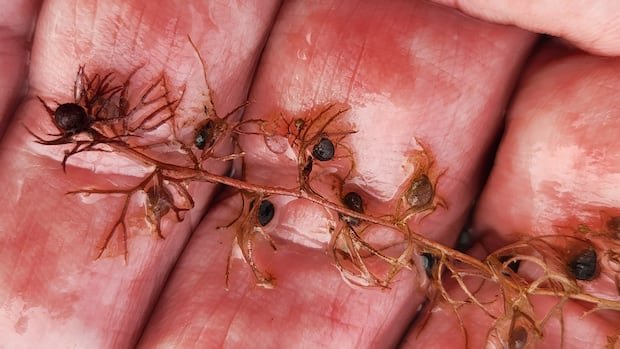

Klaus Koehler, a plant enthusiast, made a discovery at Sylvia Grinnell Territorial Park near Iqaluit that is rare in Arctic regions. He found a bladderwort plant, a brownish weed-like species, while exploring the park in July. This finding could have implications for invasive species in Northern habitats as the climate continues to warm.
The carnivorous bladderwort plant, covered with small black balls known as bladders containing nearly digested flies, is typically found in more southern regions and seldom reaches the tundra. The only other documented instance of this plant growing in the area was in 2012 when a team of scientists discovered samples of bladderwort near Kimmirut, about 120 kilometers southwest of Iqaluit.
Koehler’s discovery suggests a shift in the Arctic climate, creating a more favorable environment for plant species not commonly seen in the region. This trend is expected to impact the ecosystem significantly, with both invasive and native species likely expanding their range into the Arctic due to warmer weather conditions.
Paul Sokoloff, a senior research assistant with Ottawa’s Museum of Nature, expressed concerns about the potential introduction of invasive species into Arctic ecosystems. He emphasized the risks associated with external factors like birds, cargo ships, and Arctic visitors inadvertently transporting plant seeds into these fragile environments.
While Koehler’s finding may not have an immediate detrimental effect, Sokoloff highlighted the threat posed by over 2,500 plant species capable of invading the Arctic and outcompeting native flora. The potential consequences of climate change on Arctic vegetation remain a subject of ongoing research and observation.
Koehler intends to provide a sample of the Iqaluit bladderwort to the Museum of Nature for further analysis, aiming to contribute to a better understanding of the plant’s northward expansion.